 All Cheeked Up
The Glute Library
The Glute Library
The Flex Files
Hips, hamstrings, calves, and upper back — holds and flows that belong after leg day or on a rest day. Mild tension only.
Showing 12 of 12 exercises
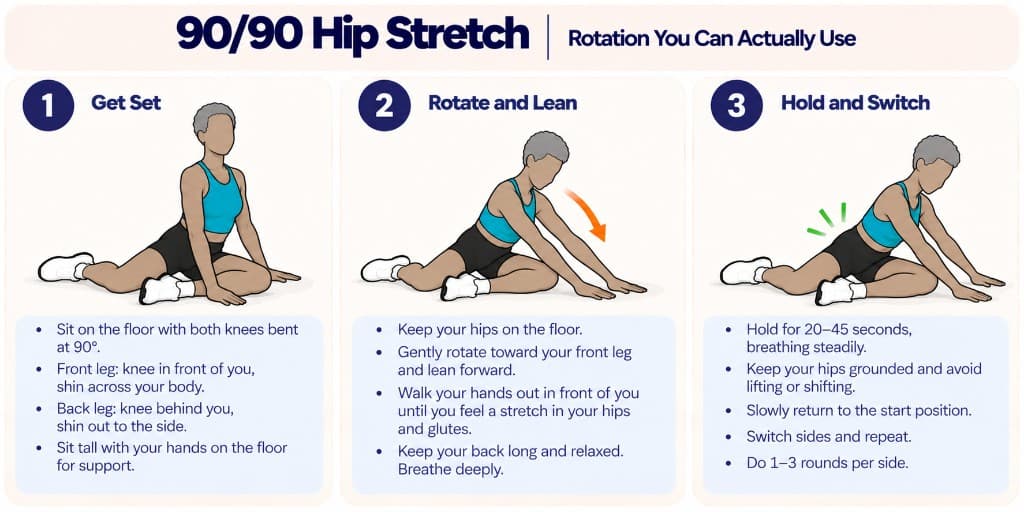
The 90/90 position trains internal and external hip rotation with both legs bent. It is quiet work that helps squat depth and single-leg balance feel less sticky.
gluteus medius
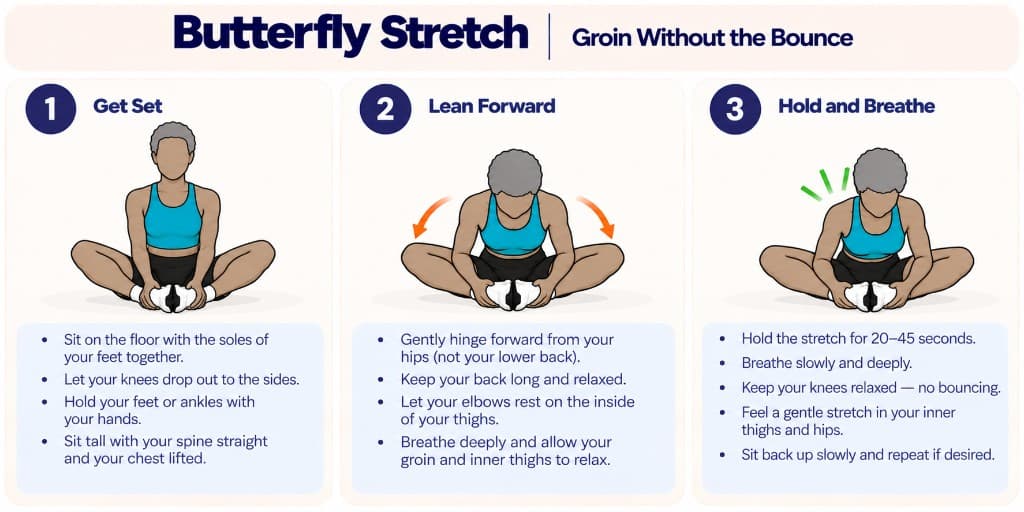
Butterfly brings the soles of the feet together and opens the inner thighs. It complements abduction work and long walks without turning into a pulse contest.
adductors
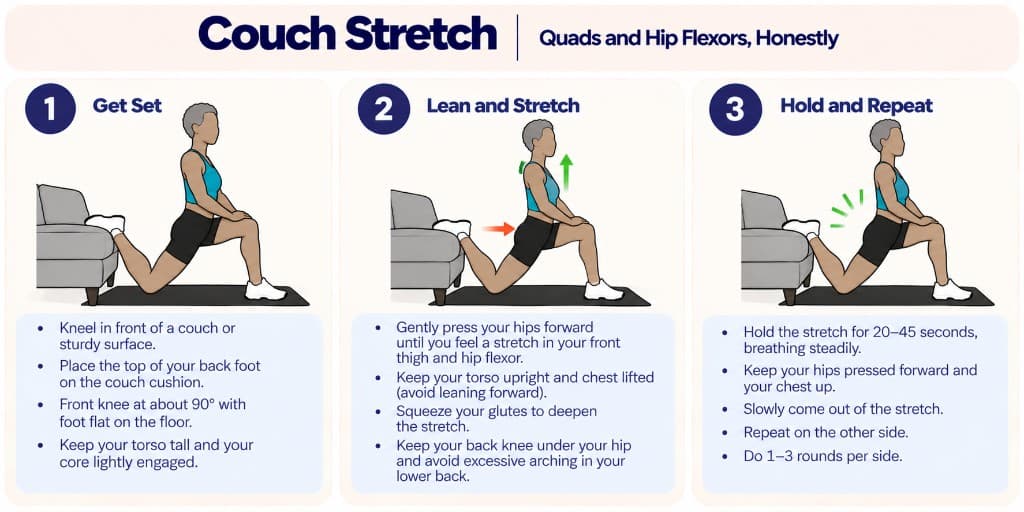
The couch stretch hits the front of the thigh and hip flexor, which often get short from sitting and from hard leg days. A wall or bench works the same way as a couch.
quadriceps
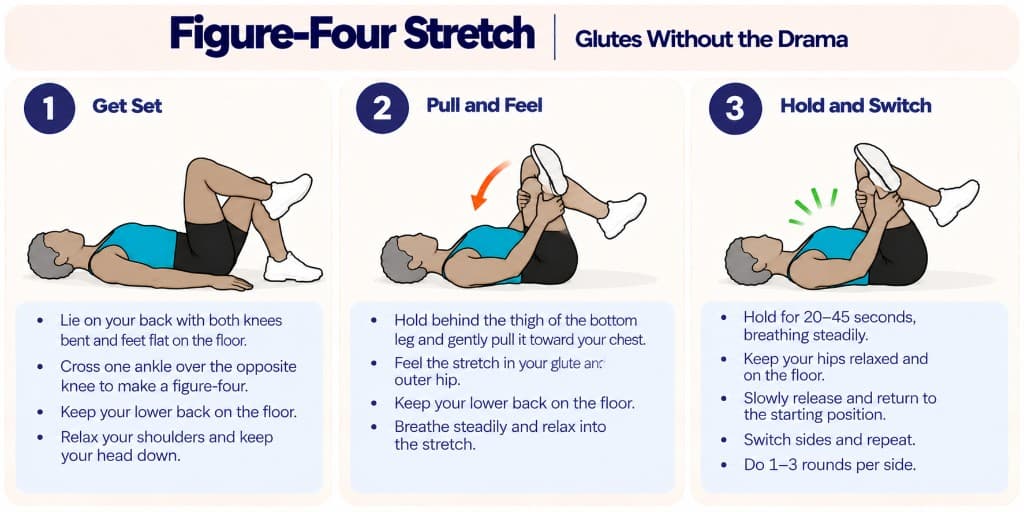
A figure-four stretch targets the deep glute and hip rotators after squats, lunges, or long sits. It is a simple cooldown when the hips feel tight, not a contest to touch your knee to the floor.
gluteus maximus
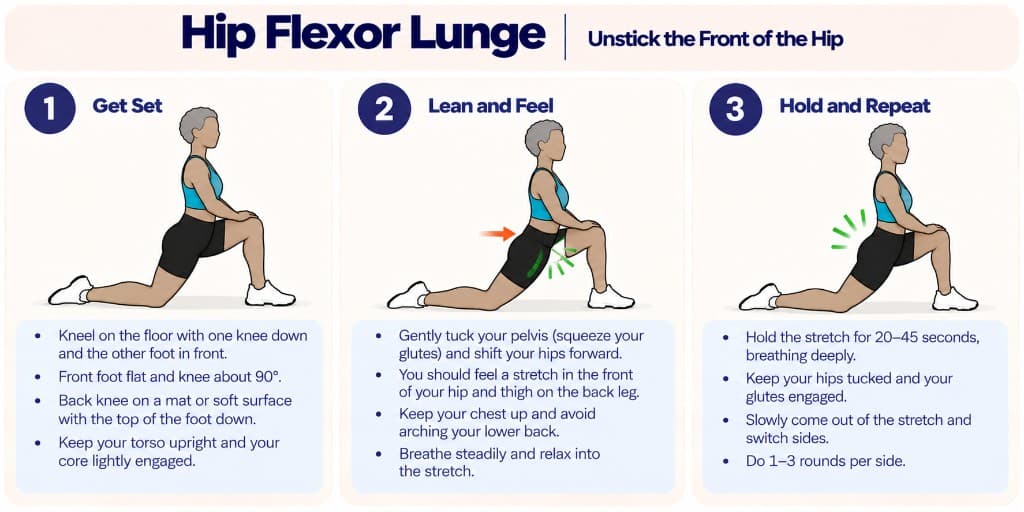
A half-kneeling hip flexor stretch is portable and pairs well before hip thrusts or after long drives. Small pelvic tilts beat big lean-backs.
quadriceps
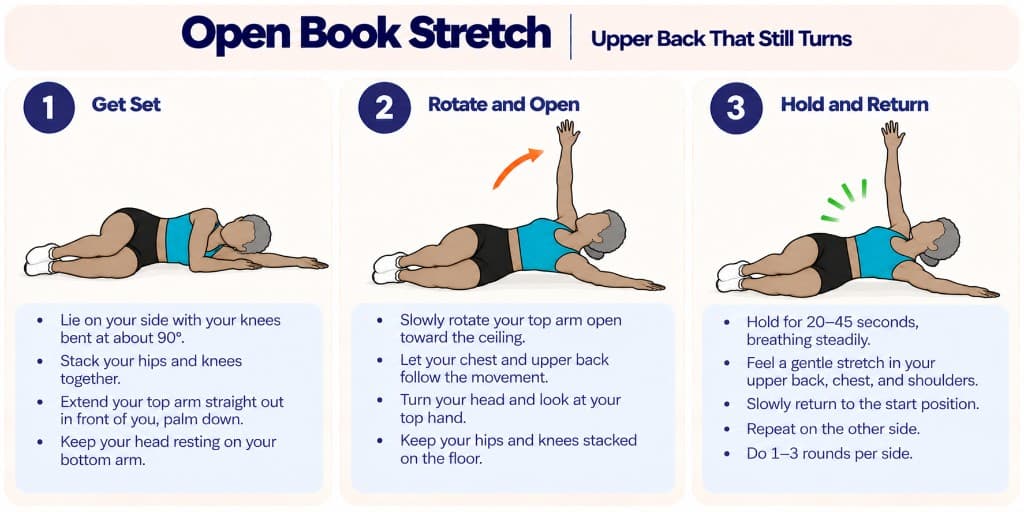
Side-lying thoracic rotation keeps the lower back quiet while the upper back opens. It pairs well with rows, hinges, and all the time you spend looking at a screen.
erectors
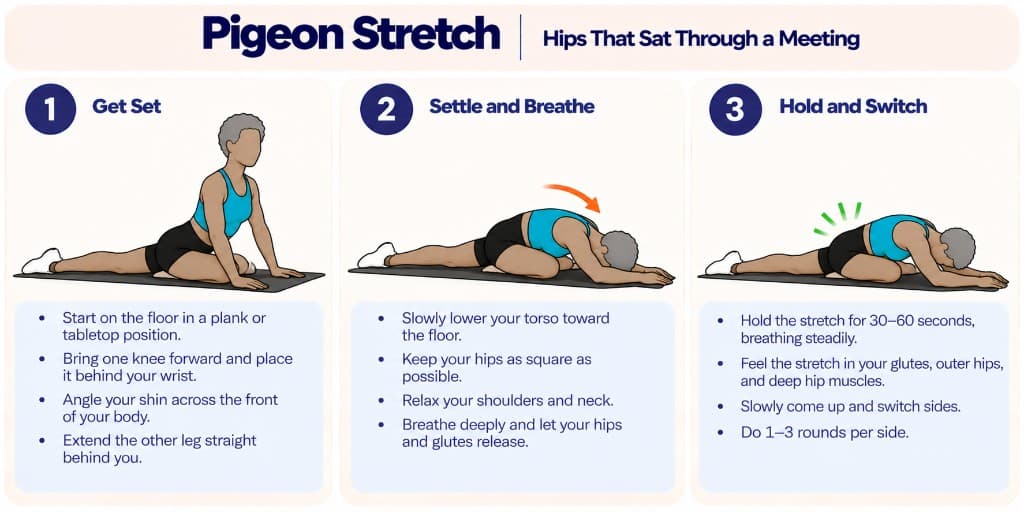
Pigeon opens the front-of-hip and outer glute in one shape. Use props under the hip if the floor feels far away, and stay square through the pelvis.
gluteus maximus
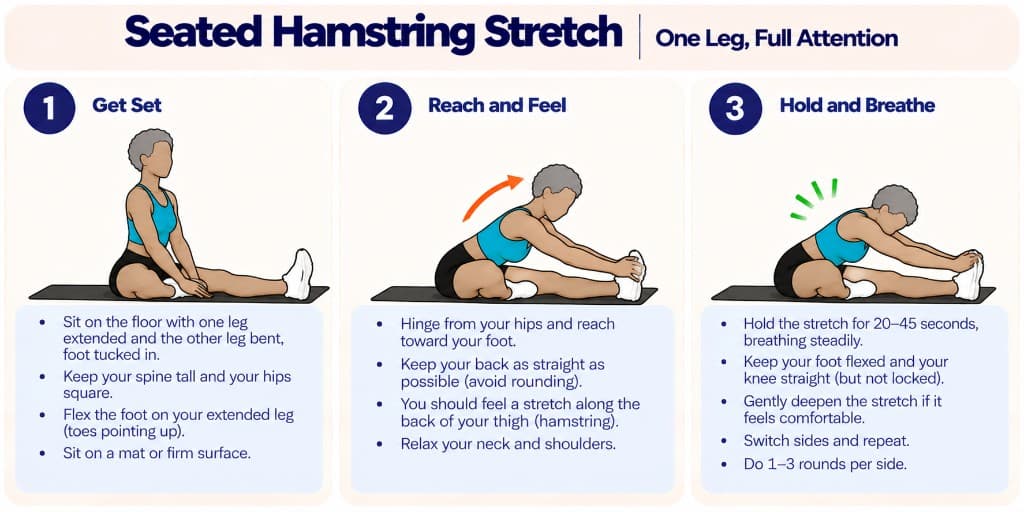
Seated single-leg stretching keeps the pelvis stable so the hamstring actually lengthens. Useful on rest days or after heavy hinges.
hamstrings
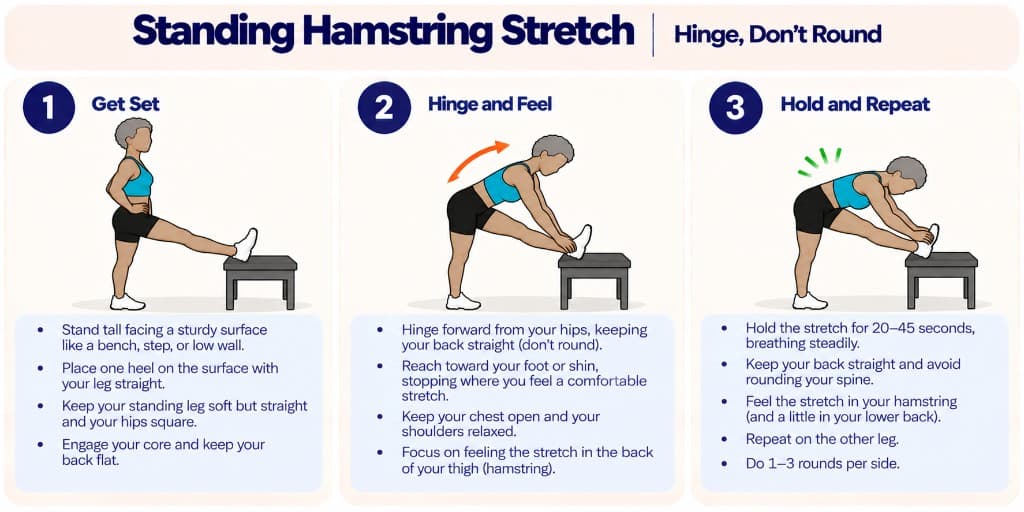
A simple standing hamstring stretch helps after RDLs, swings, or hill sprints. Think hip hinge, not collapse through the spine.
hamstrings
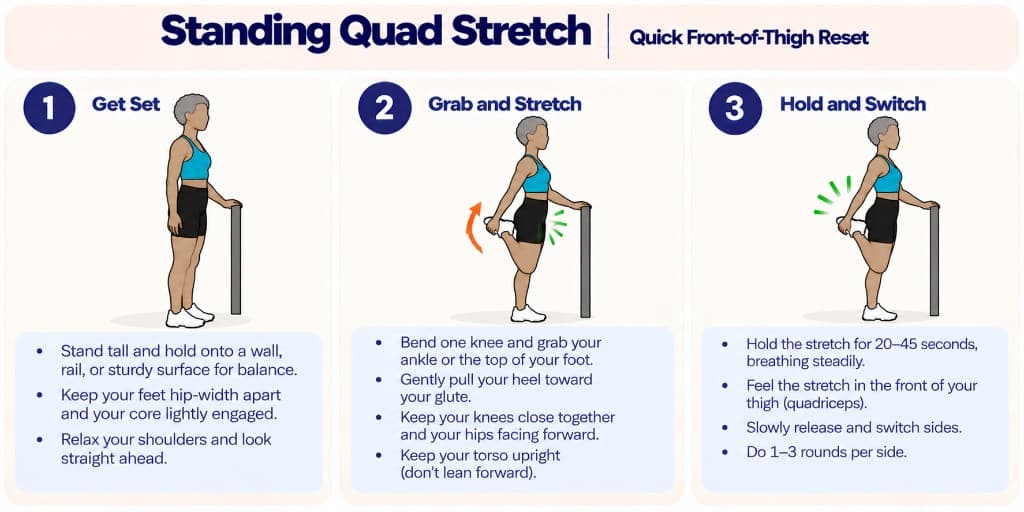
Grab the ankle, stand tall, and open the front of the thigh. It is the stretch you can do in the kitchen after leg day when the couch stretch is not happening.
quadriceps
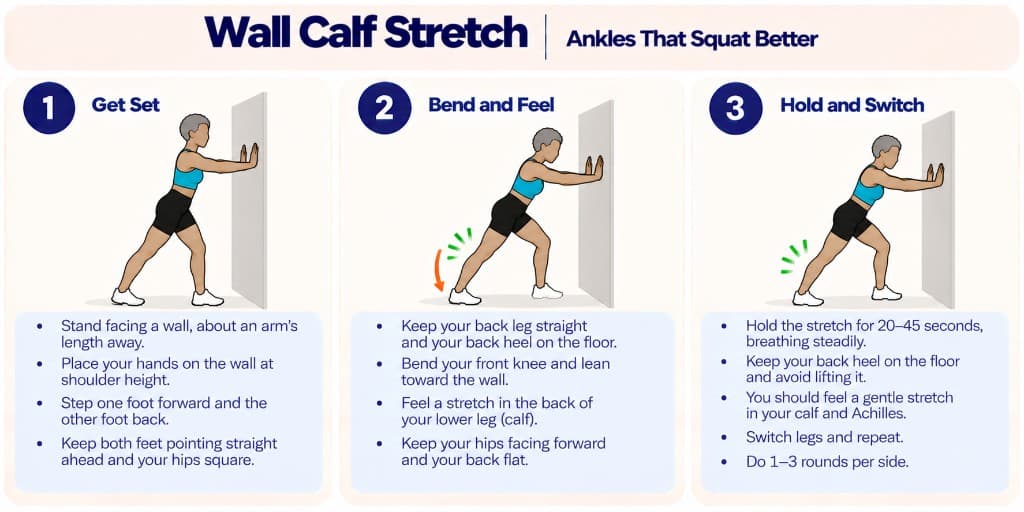
Tight calves can limit squat depth and make lunges feel stiff. A simple wall calf stretch is boring, which is why it works.
calves
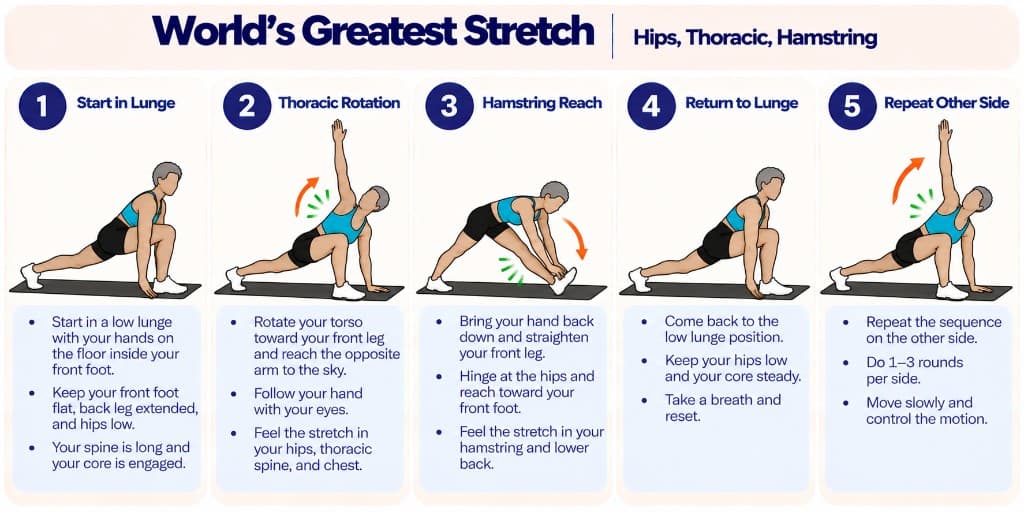
This flowing stretch hits hip flexors, groin, and upper back in one sequence. It is a solid opener before squats, lunges, or a full-body session.
hamstrings
Showing 11 of 12 exercises
The 90/90 position trains internal and external hip rotation with both legs bent. It is quiet work that helps squat depth and single-leg balance feel less sticky.
gluteus medius
Butterfly brings the soles of the feet together and opens the inner thighs. It complements abduction work and long walks without turning into a pulse contest.
adductors
A figure-four stretch targets the deep glute and hip rotators after squats, lunges, or long sits. It is a simple cooldown when the hips feel tight, not a contest to touch your knee to the floor.
gluteus maximus
A half-kneeling hip flexor stretch is portable and pairs well before hip thrusts or after long drives. Small pelvic tilts beat big lean-backs.
quadriceps
Side-lying thoracic rotation keeps the lower back quiet while the upper back opens. It pairs well with rows, hinges, and all the time you spend looking at a screen.
erectors
Pigeon opens the front-of-hip and outer glute in one shape. Use props under the hip if the floor feels far away, and stay square through the pelvis.
gluteus maximus
Seated single-leg stretching keeps the pelvis stable so the hamstring actually lengthens. Useful on rest days or after heavy hinges.
hamstrings
A simple standing hamstring stretch helps after RDLs, swings, or hill sprints. Think hip hinge, not collapse through the spine.
hamstrings
Grab the ankle, stand tall, and open the front of the thigh. It is the stretch you can do in the kitchen after leg day when the couch stretch is not happening.
quadriceps
Tight calves can limit squat depth and make lunges feel stiff. A simple wall calf stretch is boring, which is why it works.
calves
This flowing stretch hits hip flexors, groin, and upper back in one sequence. It is a solid opener before squats, lunges, or a full-body session.
hamstrings