 All Cheeked Up
The Glute Library
The Glute Library
Beyond the Cheeks
Push, pull, core, and warm-up moves that pair with leg day. Same write-ups and mistakes list, different muscles.
Showing 12 of 12 exercises
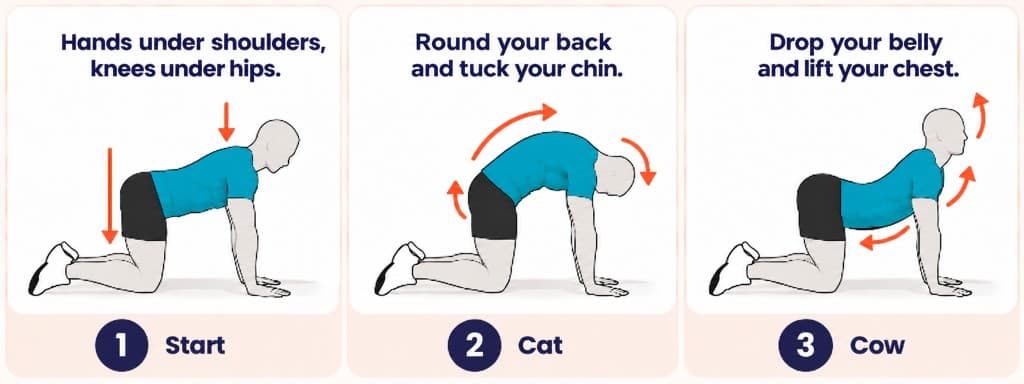
Cat-cow moves the spine through flexion and extension with breath. Use it before squats, hinges, or a full-body session to feel where your back is today.
core
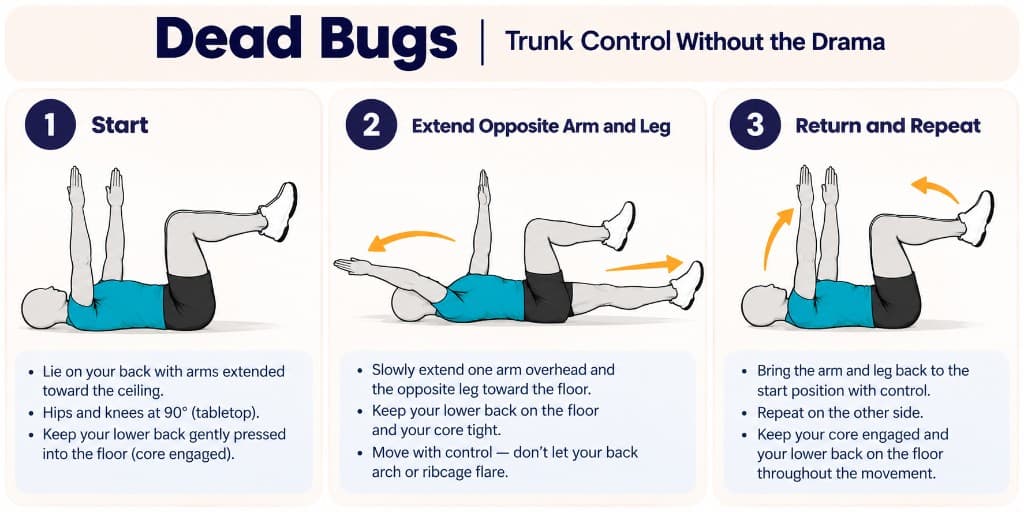
Dead bugs train the core to resist extension while the arms and legs move. They pair well with glute bridges and hip thrusts as a warm-up or finisher.
core
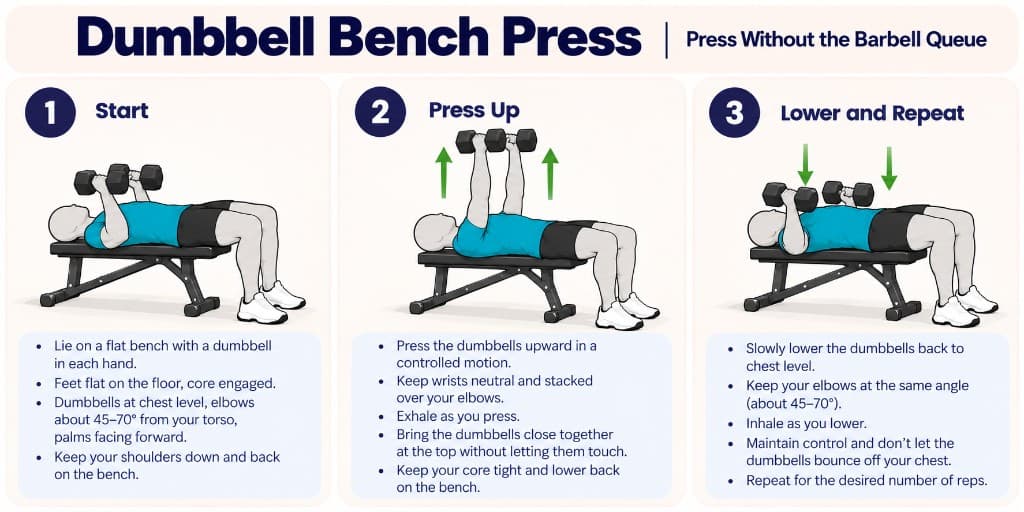
A bench press with dumbbells lets each arm move independently, which is useful for balance and shoulder comfort on upper-body days.
chest
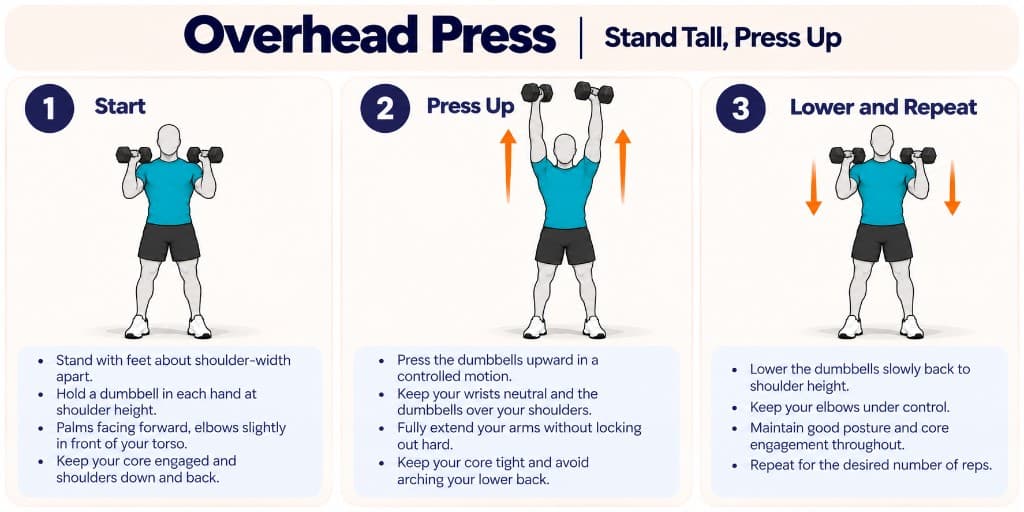
A standing overhead press builds shoulder strength and asks the trunk to stay tight while the arms move. Useful on full-body days next to squats and hinges.
shoulders
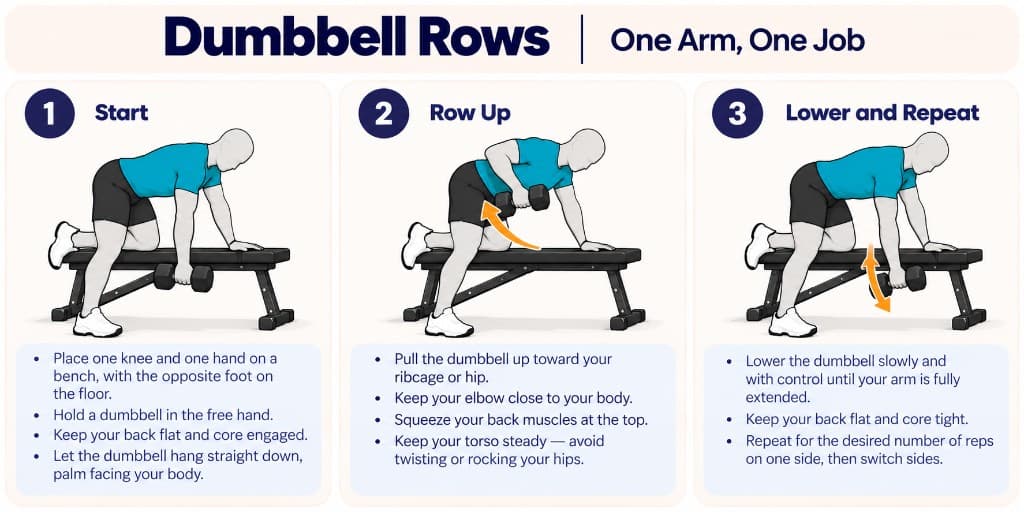
A single-arm row builds the lats and teaches the trunk to resist rotation, which carries over to single-leg glute work.
lats
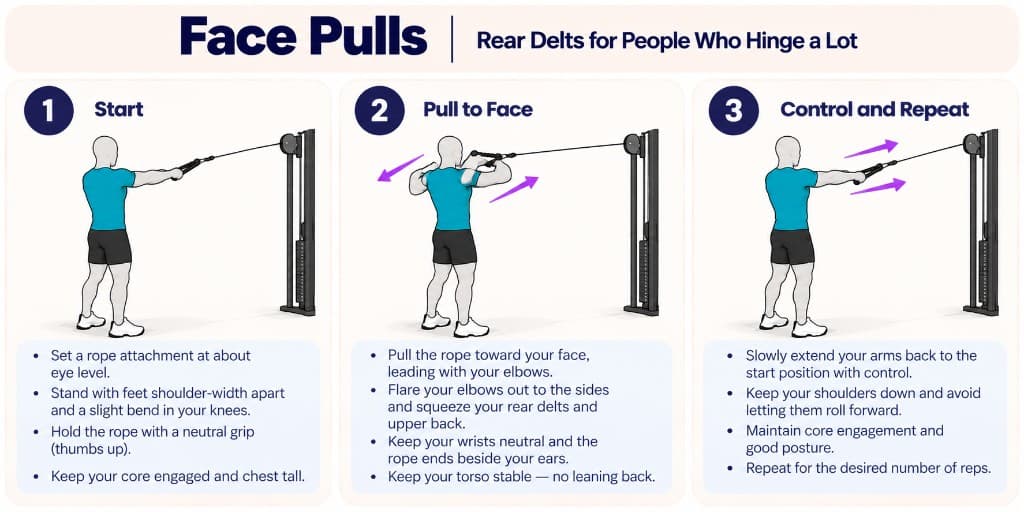
Face pulls target the rear shoulders and upper back. They are a simple counterbalance to all the pressing and hip extension in a glute-heavy week.
shoulders
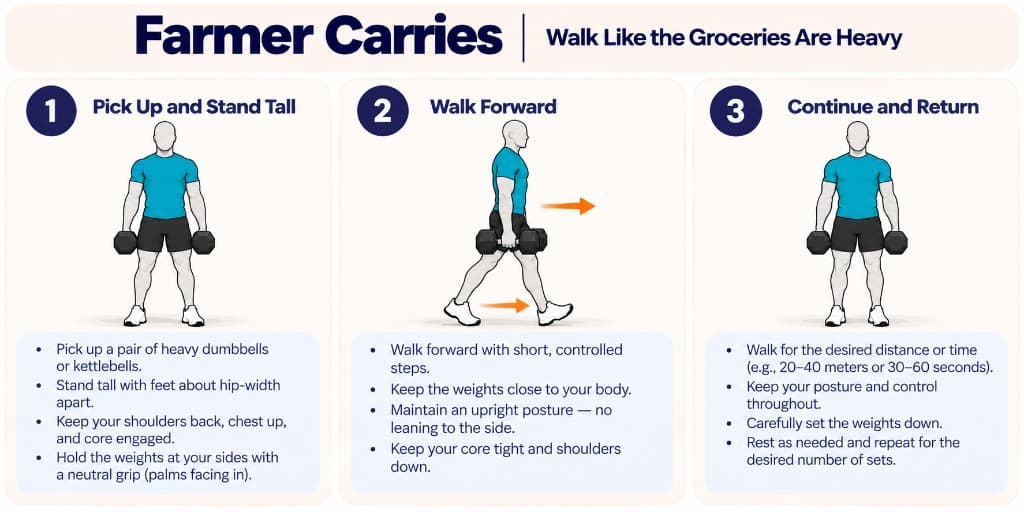
Carrying heavy dumbbells or kettlebells builds grip, trunk stiffness, and conditioning without another machine. It finishes a full-body session cleanly.
core
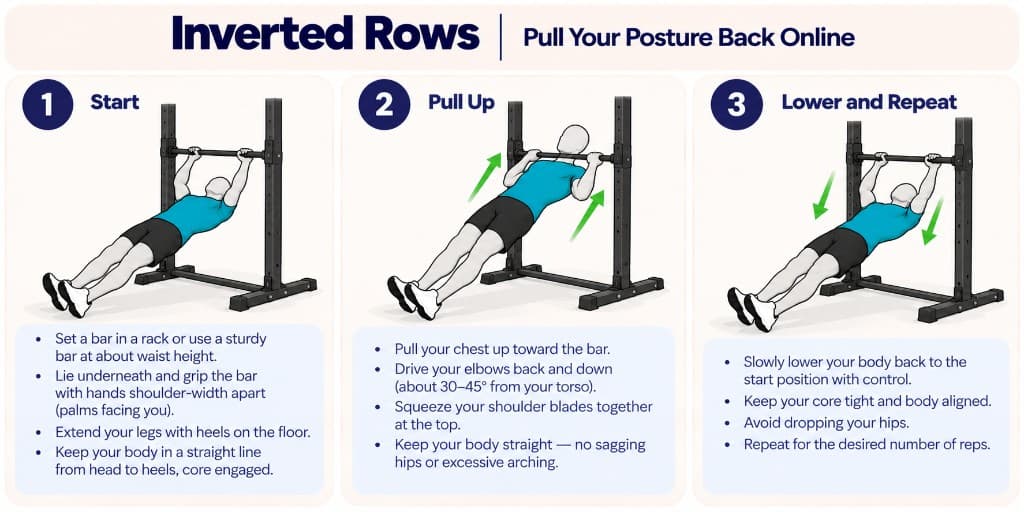
Rows with your body under a fixed bar train the upper back and lats while reminding the shoulders how to stay packed on squats and deadlifts.
lats
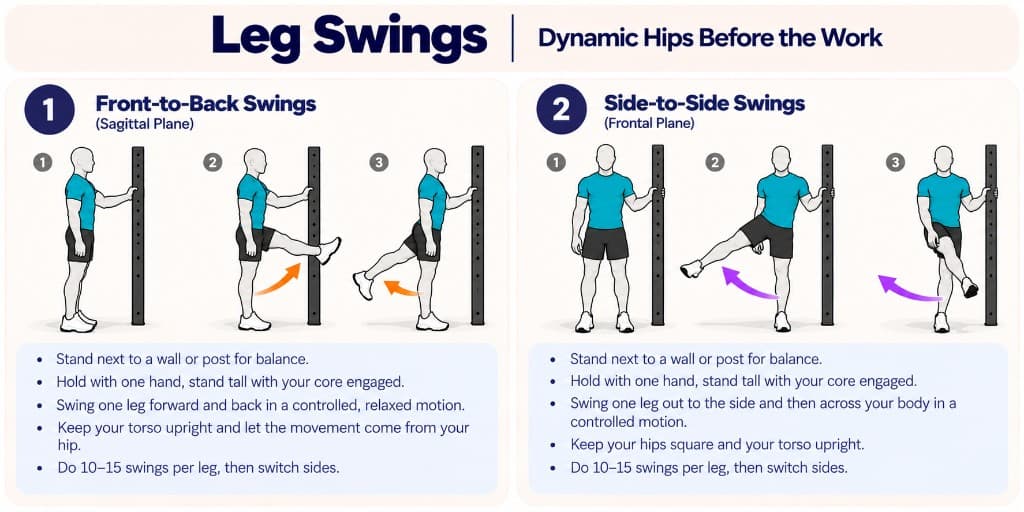
Controlled leg swings warm the hips and hamstrings before lunges, kicks, or sprints. Hold a wall for balance and stay inside a range you control.
hamstrings
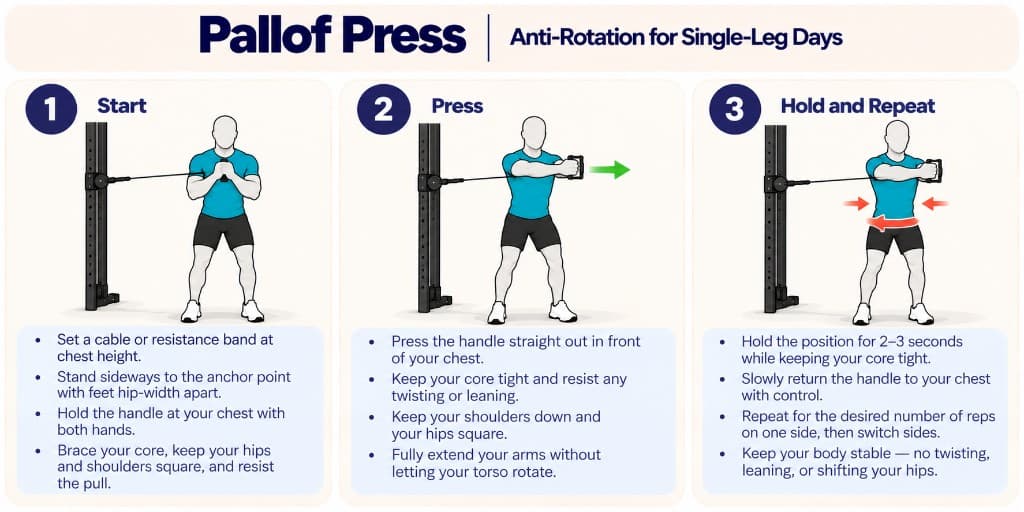
The Pallof press resists rotation through the trunk. It is a quiet exercise that pays off when you lunge, split squat, or single-leg hinge.
core
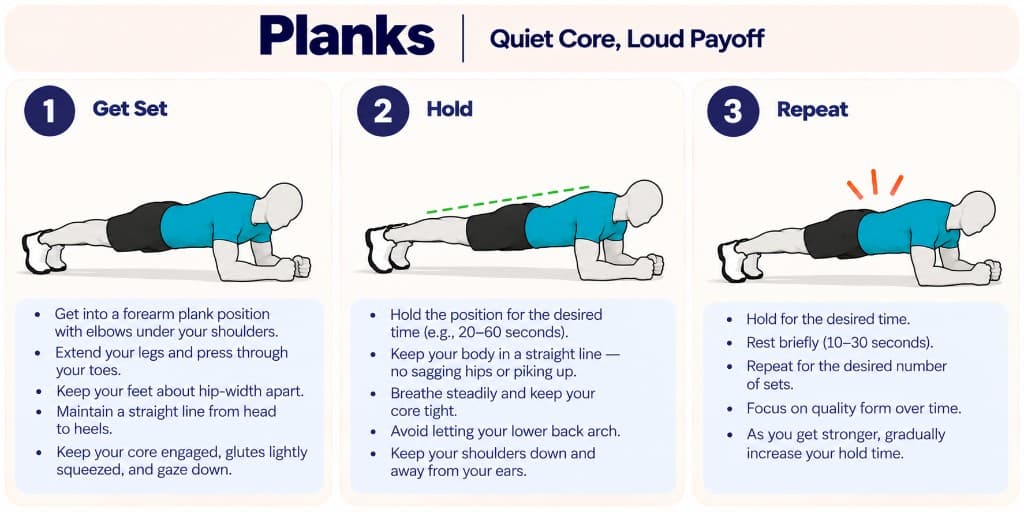
A forearm plank trains the trunk to stay rigid. It supports bracing on squats, hinges, and presses without adding another joint to babysit.
core
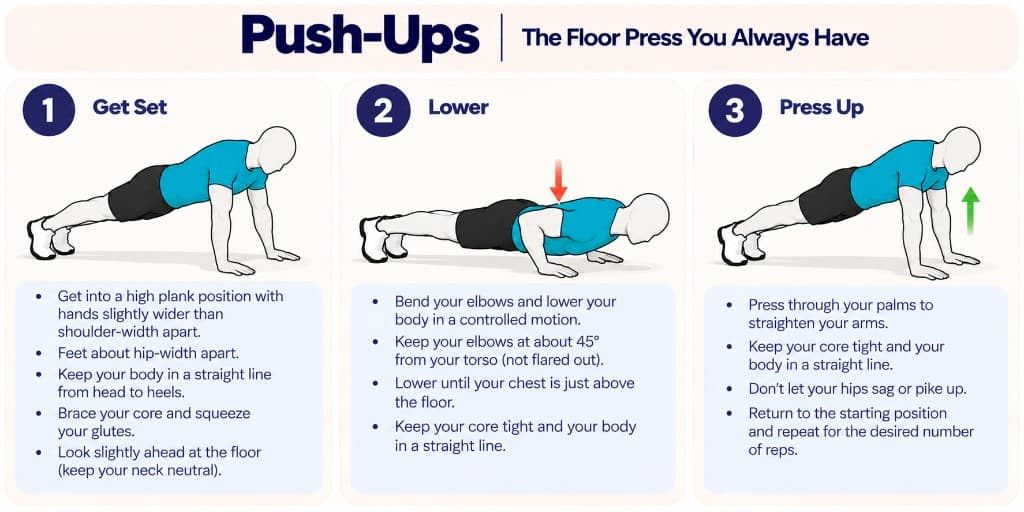
Push-ups train chest, shoulders, and trunk stiffness with no equipment. They also teach the bracing that heavy squats and hinges borrow.
chest
Showing 12 of 12 exercises
Cat-cow moves the spine through flexion and extension with breath. Use it before squats, hinges, or a full-body session to feel where your back is today.
core
Dead bugs train the core to resist extension while the arms and legs move. They pair well with glute bridges and hip thrusts as a warm-up or finisher.
core
A bench press with dumbbells lets each arm move independently, which is useful for balance and shoulder comfort on upper-body days.
chest
A standing overhead press builds shoulder strength and asks the trunk to stay tight while the arms move. Useful on full-body days next to squats and hinges.
shoulders
A single-arm row builds the lats and teaches the trunk to resist rotation, which carries over to single-leg glute work.
lats
Face pulls target the rear shoulders and upper back. They are a simple counterbalance to all the pressing and hip extension in a glute-heavy week.
shoulders
Carrying heavy dumbbells or kettlebells builds grip, trunk stiffness, and conditioning without another machine. It finishes a full-body session cleanly.
core
Rows with your body under a fixed bar train the upper back and lats while reminding the shoulders how to stay packed on squats and deadlifts.
lats
Controlled leg swings warm the hips and hamstrings before lunges, kicks, or sprints. Hold a wall for balance and stay inside a range you control.
hamstrings
The Pallof press resists rotation through the trunk. It is a quiet exercise that pays off when you lunge, split squat, or single-leg hinge.
core
A forearm plank trains the trunk to stay rigid. It supports bracing on squats, hinges, and presses without adding another joint to babysit.
core
Push-ups train chest, shoulders, and trunk stiffness with no equipment. They also teach the bracing that heavy squats and hinges borrow.
chest